The Market Education Challenge
When I launched my crane truck business in Western North Carolina, I quickly discovered a fundamental marketing problem: most potential customers don’t know what a crane truck is, let alone when they might need one.
Unlike established services like dumpster rentals or excavator work, crane trucks occupy an educational gap in our regional market. This creates both a challenge and an opportunity for a startup crane truck operator.
In my previous article about equipment selection, I covered why I chose this particular setup. Now I want to share the marketing realities of introducing an unfamiliar service to a new market.
Follow along with this Crane Truck Startup series for a play-by-play on building the business, and learn from my trials, successes, and failures. Get a behind-the-scenes look at launching a crane truck company and learn along with me.
Understanding the Crane Truck Awareness Gap
Why Crane Trucks Are Unknown in Rural Markets
In dense urban areas—think New York, Chicago, or San Francisco—crane trucks are commonplace. Limited workspace and tight access requirements make the all-in-one lifting and transporting capability essential. Contractors in these markets immediately understand the value proposition.
But in Western North Carolina’s more rural setting, the market dynamics are completely different:
- More available space means traditional cranes and separate transport are viable
- Lower population density means less equipment specialization
- Construction and landscaping businesses often own their own lifting equipment
The Articulation Problem
The hardest part of marketing my crane truck business has been clearly communicating specific use cases. When someone asks “What do you do?”, answering “I operate a crane truck” typically generates blank stares rather than business inquiries.
This is fundamentally different from saying “I rent roll-off dumpsters” or “I provide excavation services”—services where the customer immediately understands the application.
It’s worth pausing to point out the irony here. It’s hard to articulate the value of an articulated crane.
My Marketing Strategy: Cast Wide, Then Focus
Faced with this awareness gap, I made a deliberate strategic choice that goes against conventional marketing wisdom: I decided to market broadly across multiple use cases rather than niche down immediately.
The Multi-Service Approach
I developed marketing materials showcasing crane truck applications across diverse industries:
- Junk removal and cleanup services – lifting and hauling oversized items
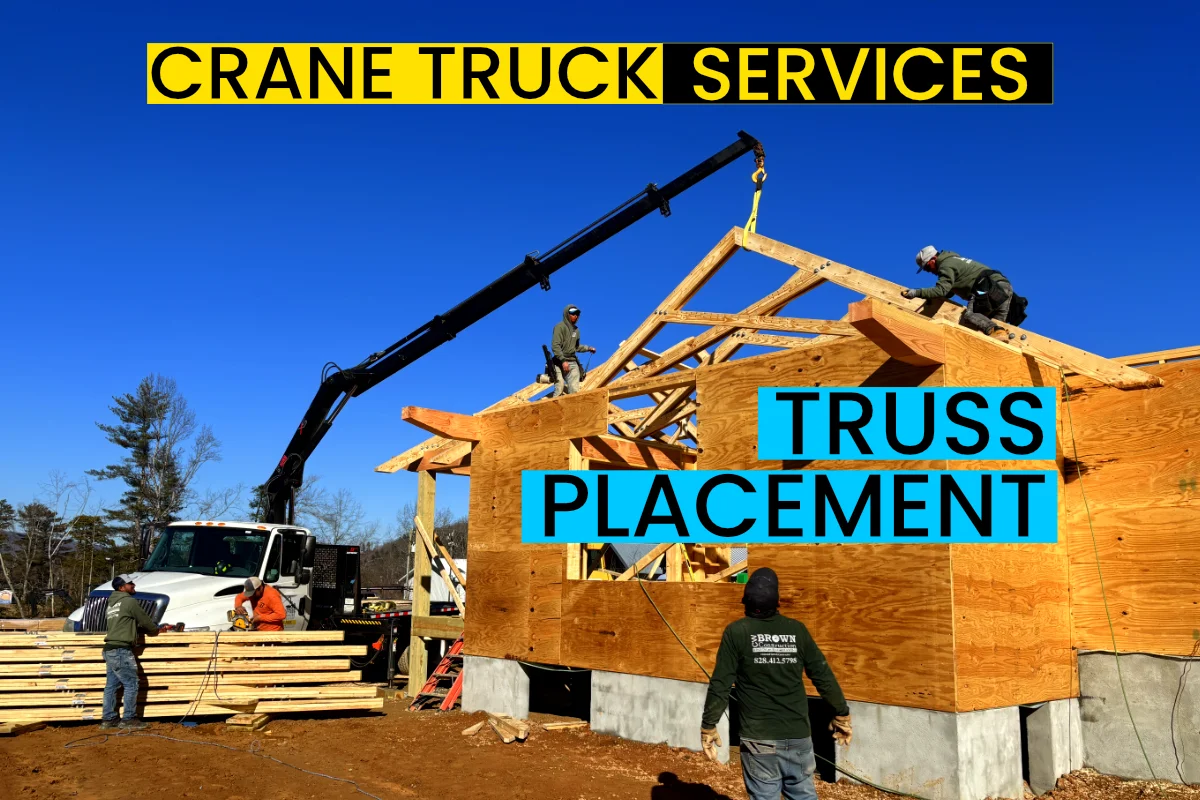
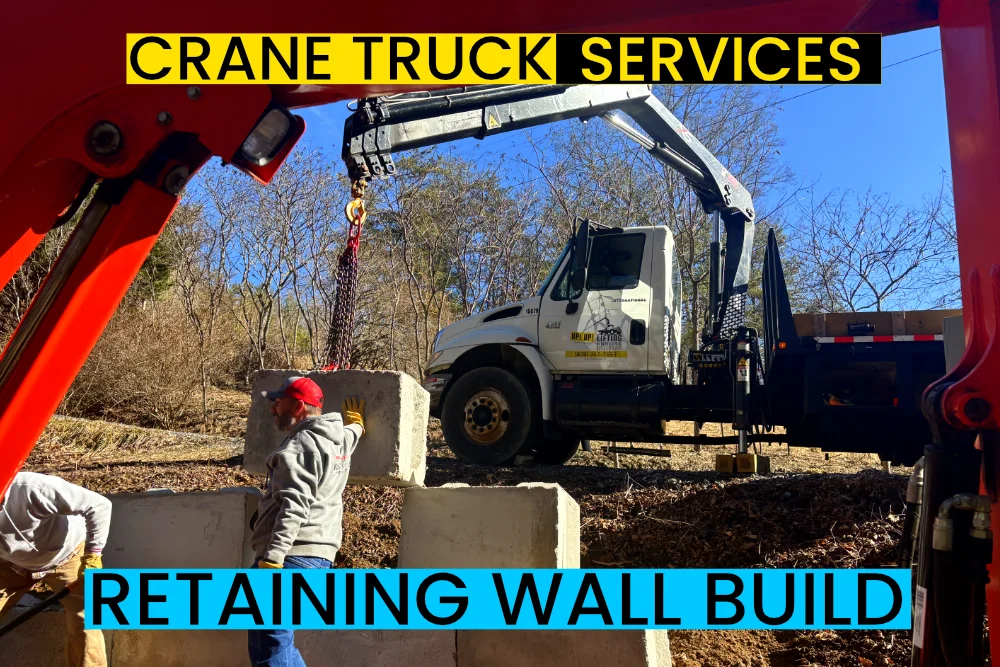
- Precast concrete placement – septic tanks, utility vaults, retaining wall blocks
- Landscaping supply delivery – boulders, large trees, bulk materials with precision placement
- Dumpster bag services – an alternative to traditional roll-off containers
- General heavy cargo transport – oversized equipment, machinery, building materials
The Trade-Off: Authority vs. Opportunity
I’m aware this broad messaging likely dilutes my website’s topical authority in any single niche. From an SEO perspective, being “the crane truck guy for precast concrete” would probably rank better than being “the crane truck guy for everything.”
However, this wide-net approach has proven valuable in the startup phase:
- It allows me to be opportunistic and take diverse jobs
- Each job type teaches me about profitability and fit
- I’m discovering which markets have the most demand
- I’m learning which applications are the best match for my equipment and skills
Building Long-Term Marketing Assets
While I’m casting a wide net for immediate customers, I’m simultaneously building assets for future focused marketing.
Content Capture Strategy
For every job, regardless of type, I prioritize documenting:
- Photos of the equipment in action and the completed result
- Video footage showing the crane truck solving specific problems
- Customer testimonials and feedback (when appropriate)
- Project details including challenges and solutions
This library of real-world applications serves multiple purposes:
- Demonstrates crane truck capabilities to skeptical prospects
- Provides specific examples for “I didn’t know you could do that” moments
- Creates content for ongoing marketing efforts
- Helps me analyze which jobs I want more of
Multi-Channel Distribution
I’m deploying this content across multiple platforms:
- Social media: Facebook, Instagram, and YouTube for visibility and engagement
- Business listings: Google Business Profile, Yelp, BBB, and Bing Places
- Company blog: Long-form crane truck articles about specific jobs (like lumber delivery), use cases, and crane truck services
- This startup series: Behind-the-scenes documentation of building this crane truck business
Each channel serves a different purpose in the customer journey, from initial awareness to final booking decision.
The Path Forward: Data-Driven Focusing
This broad approach is intentionally temporary. As I accumulate more jobs and data, I’m tracking:
- Which services generate the most inquiries
- Which jobs are most profitable per hour
- Which customers are easiest to work with
- Which applications best leverage my equipment’s unique capabilities
- Which markets have recurring demand vs. one-off needs
Over the next 6-12 months, I expect to identify 2-3 core service offerings that represent the best combination of demand, profitability, and competitive advantage. At that point, I’ll refocus my marketing to establish deeper authority in those specific niches.
The Learning Timeline
- Months 1-6 (current phase): Cast wide net, document everything, learn the market
- Months 6-12: Analyze data, identify patterns, begin soft focusing
- Months 12+: Transition to focused positioning while maintaining flexibility
Key Takeaways for Other Crane Truck Startups
If you’re starting a crane truck business in a market where the service is unfamiliar:
- Accept the education burden – You’re not just marketing services; you’re teaching a market about capabilities
- Start broad if necessary – Especially if you’re unsure which niches have demand in your area
- Document relentlessly – Every job is both revenue and marketing content
- Track everything – Data will reveal your best opportunities
- Plan to pivot – Your initial marketing strategy should evolve based on real market feedback
What’s Next in This Series
In upcoming installments, I’ll cover:
- Pricing strategies for unfamiliar services
- Building relationships with repeat customers
- Insurance and liability considerations
- Equipment maintenance and operational costs
Stay Connected
Subscribe to the Up & Up Lifting newsletter for new articles as they publish, or follow along on Facebook, Instagram, and YouTube to see the actual jobs and applications as they happen.
FAQ
What is a crane truck used for?
A crane truck (also called a boom truck) combines a hydraulic crane and cargo truck bed in one vehicle, allowing operators to both transport and lift/place materials without separate equipment.
How do you market crane truck services?
Market crane truck services by demonstrating specific use cases through photos and videos, educating potential customers on applications they may not have considered, and building presence across multiple service categories initially.
Are crane trucks common?
Crane trucks are common in urban markets with space constraints but less common in rural areas where traditional cranes and separate transport vehicles are more typical.